Chest Pain After Workout? Dan Clark Trained Through a Heart Attack
Chest pain after workout sessions is easy to explain away. Dan Clark, Nitro on American Gladiators, did it for three hours. What he felt and what he tracks now.

You train hard, you feel strong, and halfway through a session your chest tightens. It is not dramatic. It is a pressure you could explain a dozen ways, so you keep going. Chest pain after workout sessions is one of those signals that a fit person is very good at talking himself out of.
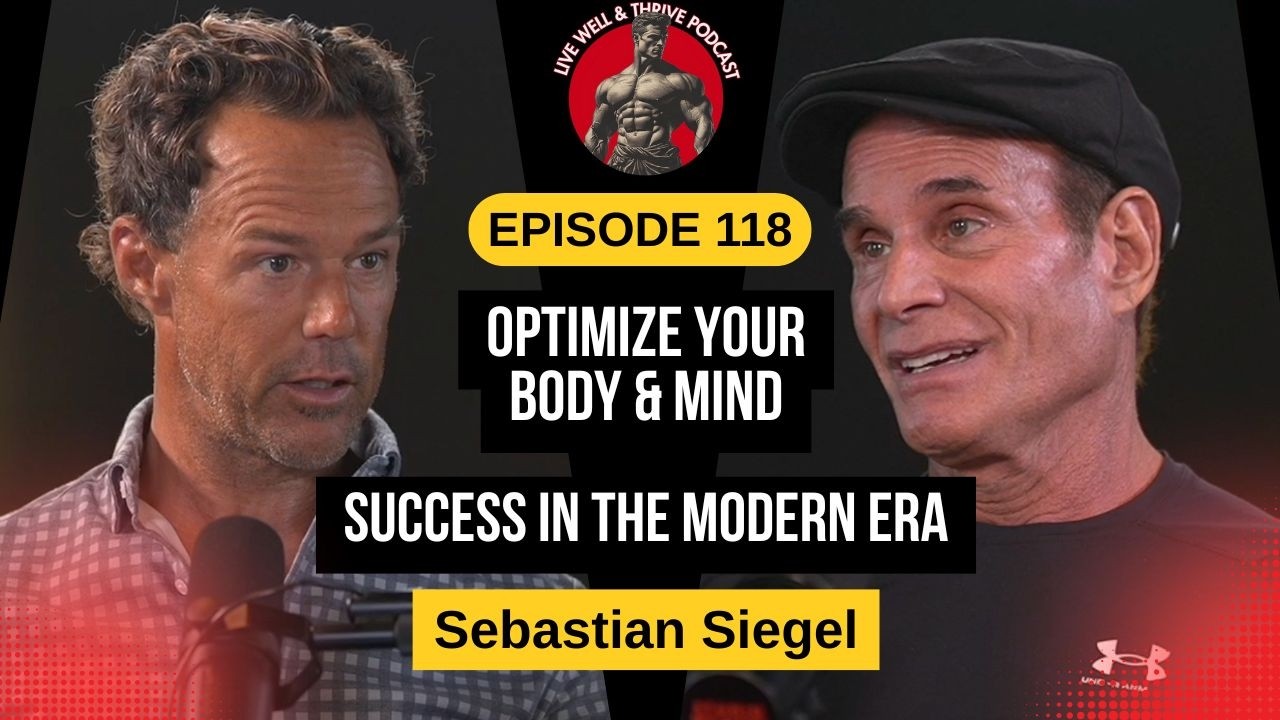
Dan Clark knows how that conversation goes, because he had it with himself in a CrossFit gym about ten years before he sat down with Mike Torchia. Most people remember him as Nitro on American Gladiators. On episode 45 of Live Well and Thrive he told Mike what the heart attack actually felt like, why being in shape made him slower to act, and what he watches now. This is his account, in his words where possible.
Chest pain after workout is not something fitness protects you from
The first thing that slowed Dan down was a picture in his head. What he knew about heart attacks came from television: a man clutching his chest, hitting the floor, out cold. Nothing like that was happening to him.
The second thing was his body. He had spent decades as an athlete, through football, Gladiators, jiujitsu and boxing. Being fit made a heart attack feel impossible, and he said so plainly.
When you’re in great shape, you don’t even think about it. It’s not even the realm of possibility.
That belief is the trap for the reader this post is written for. You lift, you watch your food, your doctor visits are rare. Dan told Mike he had not seen a doctor in about 20 years outside of surgeries, and he did not believe in going until the heart attack changed his mind. A heart attack in athletes is not supposed to happen, so chest pain after workout gets filed under a pulled muscle or a hard set.
The heart attack symptoms Dan Clark felt were quieter than the movies
Dan was clear that his pain started small. It was minor at first. Then, as he kept training, it got worse, and kept getting worse. It never put him on the ground.
It felt like someone was sticking a screwdriver in my chest.
The detail that finally registered was his arm. His left arm started to shake, and only then did he connect it to what he had heard about heart attack symptoms: chest pain with something wrong in the left arm. He had heard of left arm numbness as a classic sign; his version was a tremor.
He contrasted it with something he saw later on a pickleball court, where a man a few courts over collapsed, stopped breathing, and needed CPR. That is the picture most people carry. Dan’s own heart attack looked nothing like it, which is exactly why he did not stop. That is the risk when chest pain after workout builds slowly: nothing about it looks like an emergency. For the side of heart disease that gives no signal at all, see signs of heart problems you cannot feel.
Three hours of chest pain during a workout changed what mattered
At the hospital, Dan said, they ran an enzyme test and an EKG and told him he was having a heart attack. They also told him how long it had been going on: about three hours. He tried to keep it light and asked the doctor if he was going to make it. The answer was not the reassurance he was looking for.
You’ve been having chest pain for this long, I don’t know how much damage you have.
Then the doctor walked out. Dan described that moment as the point where his priorities reset. The houses, the German cars in the driveway and the plaques on the wall stopped mattering.
Everything that I thought was important became insignificant. I just wanted the people in my life that I loved close to me.
He called his partner, his sister and his son. The next day he made a pledge to rebuild his life. For a man whose life had been built around being seen as strong, that was the real turn in the story, more than the procedure that followed.
What Dan learned about how his heart attack happened
Dan told Mike he had always assumed a heart attack meant clogged arteries: plaque building up in the wall over years until blood stops getting through. His case, as his doctors explained it to him, was different. In his words, the lining of the artery tore, and the body’s own clotting response, sent to patch the tear, ended up blocking the artery.
They went in through the groin and placed a stent while he was awake, and he watched it on the screen. The doctor showed him where the artery wall had broken. It also took longer than planned, because, as Dan tells it, his arteries were too large for a standard stent, and they had to find a different one.
He laughs about the big arteries now, but not completely. On a recent visit, he said, his cardiologist told him his aortic root had enlarged since the last check, and that bigger, here, is not better. The lesson he draws is that an athlete’s body does not exempt it from the heart’s rules. It just changes which ones apply.
Life after a heart attack runs on tests, not one number
Dan’s life after a heart attack is a set of agreements with his doctors, and he described them in detail.
The first involves testosterone. About six years ago he had a three-level reconstructive back surgery, after which he developed three clots in his calf and two pulmonary embolisms. His hematologist made it simple: as long as he takes any testosterone, at any dose, he stays on a blood thinner, because testosterone thickens the blood and raises hematocrit. Testosterone and blood clots are linked in his own care plan, and he accepts the condition rather than dropping either.
The second is a statin. He was resistant at first and wanted off it. He now takes half the smallest dose his doctor offered, on the condition that his numbers stay where they want them, which he said is far lower than the targets for someone who has never had a heart event. His view is that statins are controversial for the general population, but proven for people like him who have already had a cardiovascular incident.
The third is what he measures. Dan gets a test that looks at LDL particle size and count, because, as he explained it, two people can share the same LDL number while one carries far more particles that can work their way into the artery wall. That is what an advanced lipid panel is for. And above the cholesterol numbers, he watches calcification.
I’m not a big cholesterol number guy. I’m a big calcium score guy.
If that phrase is new to you, the CAC score post explains the scan. Dan also has his cardiologist check his arteries directly about every two years. On top of that he describes a longevity routine of his own, including peptides, a light dose of metformin at night and a cold plunge at the side of his house. He is not prescribing any of it. His summary of the goal: he does not only want lifespan, he wants health span.
Tested, not guessed: where Operation Fitness starts
Mike’s response to all of this was simple: follow what your doctor says, and build the rest of your health around it. That is the order at Operation Fitness. The plan starts with testing, not with a guess. Bloodwork and physician input come first; training, nutrition and recovery are built on top, designed by Mike and delivered by his team.
Dan’s story is the case for that order. Chest pain after workout was his body’s first message, and he nearly ignored it. He was strong, he trained every week, and he went 20 years without a doctor. The heart attack did not care. If you want to see how a plan is put together around what your tests show, start with the programs page.
Where to go from here
Watch the full episode with Dan Clark on YouTube. See how testing, training and recovery fit together on the programs page. If you have been training through warning signs and want a plan built around what your body is actually telling you, book a consultation.
QUESTIONS PEOPLE ASK
Should you keep training through chest pain?
Dan Clark did, and it is the part of his story he tells as a warning. The pain started small in a CrossFit gym, got worse as he kept going, and he reached the hospital about three hours in. As general context, not from the episode: chest pain during or after exercise, especially with arm symptoms, shortness of breath, or sweating, is a reason to stop and call emergency services.
Are statins safe after a heart attack?
Dan's view on the episode is that statin use is controversial in general, but that people who have already had a cardiovascular event are the group it is proven to help, and he counts himself in it. He takes a light dose by agreement with his doctor, tied to his numbers staying where they want them. Whether a statin is right for you is a decision for your own physician.
Does testosterone thicken your blood?
That is what Dan's hematologist told him. After a back surgery left him with three clots in his calf and two pulmonary embolisms, she set a condition: if he keeps taking any testosterone, at any dose, he stays on a blood thinner, because testosterone raises hematocrit, the share of red blood cells in the blood. The episode does not cover anyone else's case.
What is an LDL particle test?
Dan described it as a second test he always makes sure to get. His point was that two people can share the same LDL number while one carries far more particles than the other, and that particle count and size matter for how cholesterol gets into the artery wall. Ask your physician whether an advanced lipid panel belongs in your own testing.
KEEP READING