Do Red Light Masks Work? What a Device Engineer Told Mike
Do red light masks work? Bill Wiedemann builds them and told Mike Torchia most do nothing. What separates a working red light mask from a toy, in his words.
Your feed has decided you need a glowing plastic face. The masks run from cheap to startling, every one of them shows the same before and after, and you cannot tell which of them, if any, does a thing.
So do red light masks work? You are not going to get a straight answer from an ad. You might get one from someone who builds the devices and is willing to talk about the ones that fail.
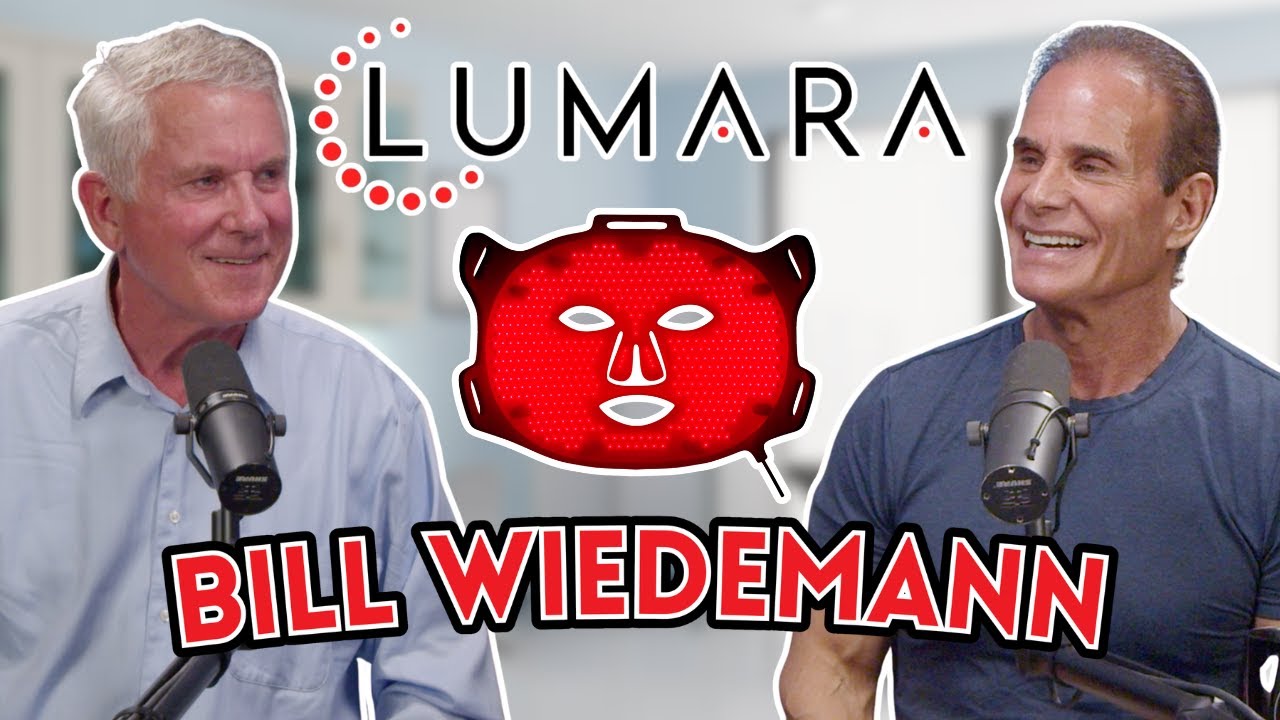
On the July 28, 2025 episode of Live Well and Thrive, Mike Torchia sat down with Bill Wiedemann, a medical device engineer whose company, Lumara Systems, makes a red light panel for clinics and a mask for home. Weigh what follows with that in mind: he sells one. The most useful part of the conversation was still what he said about the masks he does not make.
Do red light masks work? Most do not, says a man who builds them
Wiedemann did not defend his industry. Asked about products in the biohacking and red light space, he said this.
The vast majority of products don’t do anything.
His reason is coverage. He described masks with about ten lights across the forehead and compared them to putting on sunscreen as ten dots and walking out the door. You have applied something. You have not covered anything. A face is a surface, and a few bright points on it leave most of the skin untreated.
He hears the result of this from both directions. Buyers call his company and say they have bought red light for years and never found one that worked. Dermatologists and plastic surgeons tell his sales people that red light does nothing. His answer to both is the same: you tried the ones that do nothing. That is a convenient thing for a manufacturer to say. It is also a testable one, and he gave the tests.
What a working mask has: the right red, close together, on the skin
Three things came up repeatedly.
The first is wavelength. Wiedemann says the job is to find the colors of light that penetrate skin and give a benefit, and that his devices use a 660 nanometer red. He stressed to Mike that red is not a specification. A light can look red and sit at the wrong point on the spectrum. If a product does not tell you its wavelength, you have learned something about the product.
The second is density. He held his mask up to the camera to show how tightly the lights are set. The goal, in his words, is uniform coverage, the opposite of the ten dots.
The third is contact, and Mike asked about it directly.
If the mask is touching your face, you’re going to get more into your skin.
Wiedemann explained that a face hovering a quarter inch off the lights still gets some light. A face touching them gets more. His mask is built to be worn lying down, strapped on, and it shuts itself off after 20 minutes.
What red light does for your face, as he explains it
Mike offered the usual explanation, that red light stimulates collagen, and Wiedemann took it a level down. Everything in the body runs on ATP, he said, the fuel a cell makes for itself. Red light reaches the cell and supports the part of it that produces that fuel.
A skin cell with a fresh supply, in his account, divides sooner. The skin turns over faster and newer cells reach the surface. He says older skin turns over slowly, and that speeding the turnover is why treated skin looks smoother. A longer version of this mechanism, from the chiropractor who builds the full-body bed Mike uses, is in red light therapy benefits.
Treat this as the maker’s model of his own product. It explains what he believes is happening. It is not a finding this site can stand behind, and he did not cite one.
Scrub first, and use it after a treatment
Wiedemann’s most practical advice was about order. A mask alone gives some benefit, he said. Exfoliate first, with something as plain as a scrubbing pad, and the two work together. Add a green tea toner and, by his arithmetic, the effect multiplies again. The numbers he used were a figure of speech. The sequence is the point: prepare the skin, then use the light.
His first customers were estheticians, dermatologists, and plastic surgeons, and he says they use red light straight after their own procedures. Mike asked whether that was wise when a face is raw from a facial. Wiedemann’s answer was that a laser peel, a chemical peel, or microneedling are all fine, and that the test is pain. If it hurts to put the mask on, do not. He ruled out open wounds and the heavier peels that leave the skin blistered.
His claim for the combination is that recovery takes half the time and the end result is better. That is his claim. The person who performed your treatment knows your skin and should make that call.
How soon you see results, and what happens if you stop
Wiedemann put the timeline at a couple of days for a first visible change, and about five days if you are doing the preparation as well. Those are a seller’s numbers and you should hold them loosely.
Mike’s concern was the other end. Say it works and you love it. What happens when you stop? Do you go back to where you started?
You’re going to backslide, but you’re not going to just fall off a cliff.
Wiedemann compared it to riding an escalator part of the way up a building. You keep the floors you climbed. Mike compared it to training, where stopping costs you what you built, and Wiedemann agreed that was closer: stop, and you drift back gradually.
The pattern matches what Mike was told about his own sessions in a full-body bed. The doctor who introduced him to it said to come every weekday, because the effect is cumulative. A device you use twice and leave in a drawer is not being tested.
What it costs, and why Mike asked for nine months first
Wiedemann gave his retail prices on air: $600 for the mask and $1,800 for the full-size panel, with a warranty of two to three years. Mike’s interest was the comparison. A bed needs a room, cleaning, and maintenance. A mask goes in a suitcase.
Mike did not put red light on his show quickly. When the doctor first suggested the bed, Mike set terms.
After a certain period of time, if I truly feel results, I’m going to bring you on my show.
He added that he would also say so on air if it failed. He then went Monday through Friday for nine months before he judged it. His report was better skin, less stiffness, and more energy. He also said his hair seemed thicker and that he could not judge it, because he was doing too many other things at once. Ask do red light masks work, and the honest reply is about one specific mask, used for long enough to know. That sentence of Mike’s is the standard to borrow. Give a device time, and be honest about what else changed.
How this fits the way Operation Fitness works
Mike told Wiedemann that as a competitive bodybuilder he cared about the outside of his body, and that as he moved into training other people he started caring about the inside: organs, joints, skin. A mask is a small part of that picture and it is still an add-on.
Operation Fitness keeps a simple rule for tools like this. A shortcut is what you do instead of the work. A hack is what you do around it. A red light mask does not replace sleep, food, or training, and neither man suggested it does. Wiedemann’s closing thought was that at his age and Mike’s, the goal is to look as good as you can for the years you have. Where a mask, a pad, a panel, and a bed each fit is laid out on the biohacks page.
Where to go from here
Watch the full episode with Bill Wiedemann on YouTube. Compare red light with the other two recovery tools Mike uses on the biohacks page. If you want a plan that starts with your body instead of a device, book a consultation.
QUESTIONS PEOPLE ASK
What does red light therapy do for your face?
Bill Wiedemann's explanation on the episode is that red light reaches the cells of the skin and helps them produce ATP, the fuel a cell runs on. A cell with a fresh supply divides sooner, he says, so the skin turns over faster, the way it did when you were younger. That is a device maker describing how he believes his product works, not a clinical promise.
How long does a red light mask take to work?
Wiedemann says users of a well-built mask see a change within a couple of days, and within about five days if they prepare the skin first. Those are his figures for his own device. Mike gave a red light bed nine months of weekday sessions before he judged it. Expect the honest answer to sit somewhere between a maker's estimate and your own patience.
How often should you use a red light mask?
On the episode, Wiedemann describes five minutes a day with his clinic panel, and says his mask shuts itself off after 20 minutes. Mike was told by the doctor who introduced him to red light that frequent sessions matter because the effect is cumulative. Neither man gives a universal schedule. Follow the instructions that come with the device you own.
Can you use a red light mask after microneedling or a peel?
Wiedemann says yes for the common treatments: a laser peel, a chemical peel, microneedling. His line is pain. If putting the mask on hurts, or the skin is open or blistered, he says not to use it. He adds that estheticians use red light after treatments because, in his words, recovery takes half the time. Ask the person who performed your treatment first.
KEEP READING