Men's Mental Health: Dan Clark on Grief, Armor, and Therapy
Men's mental health, told by a man who built a body as armor. Dan Clark, Nitro on American Gladiators, on grief, therapy at 25, and what he chases at 60.

Men’s mental health rarely announces itself. It shows up as a man who is fine, who trains, who works, who has more than he ever expected, and who cannot say why none of it feels like anything. It shows up as the drink, the late night, the gym session that runs an hour longer than it needs to.
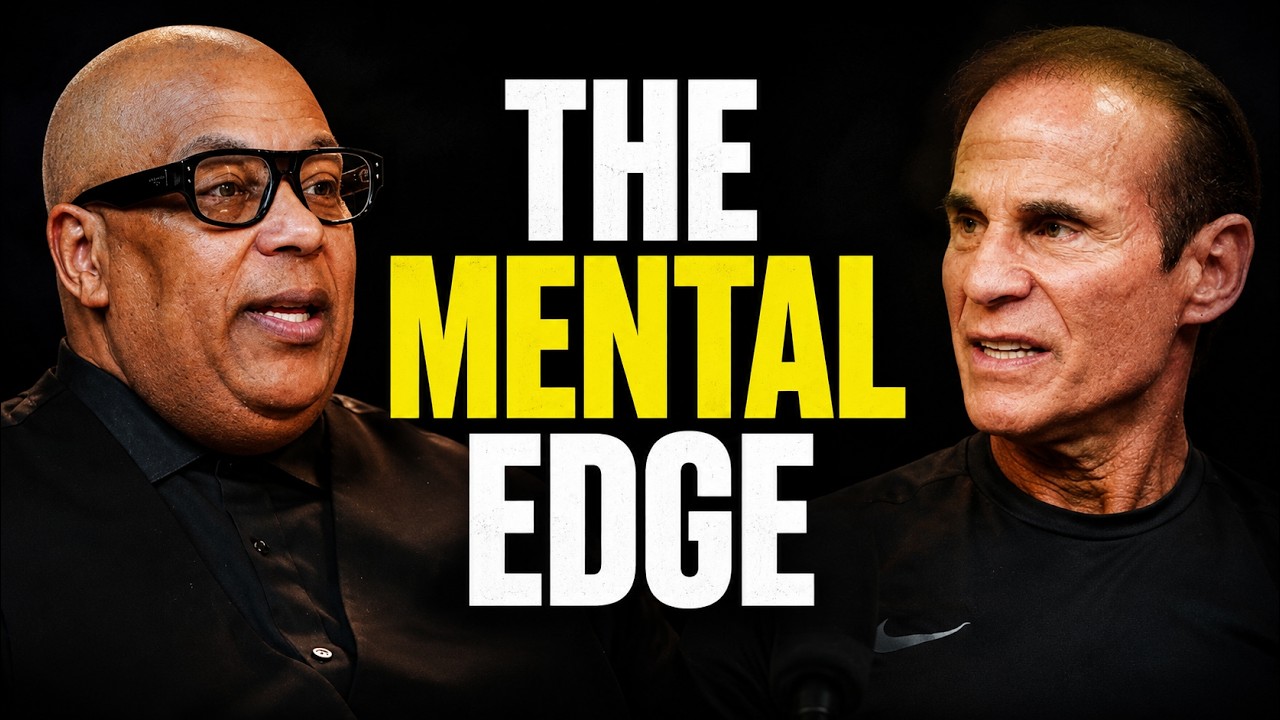
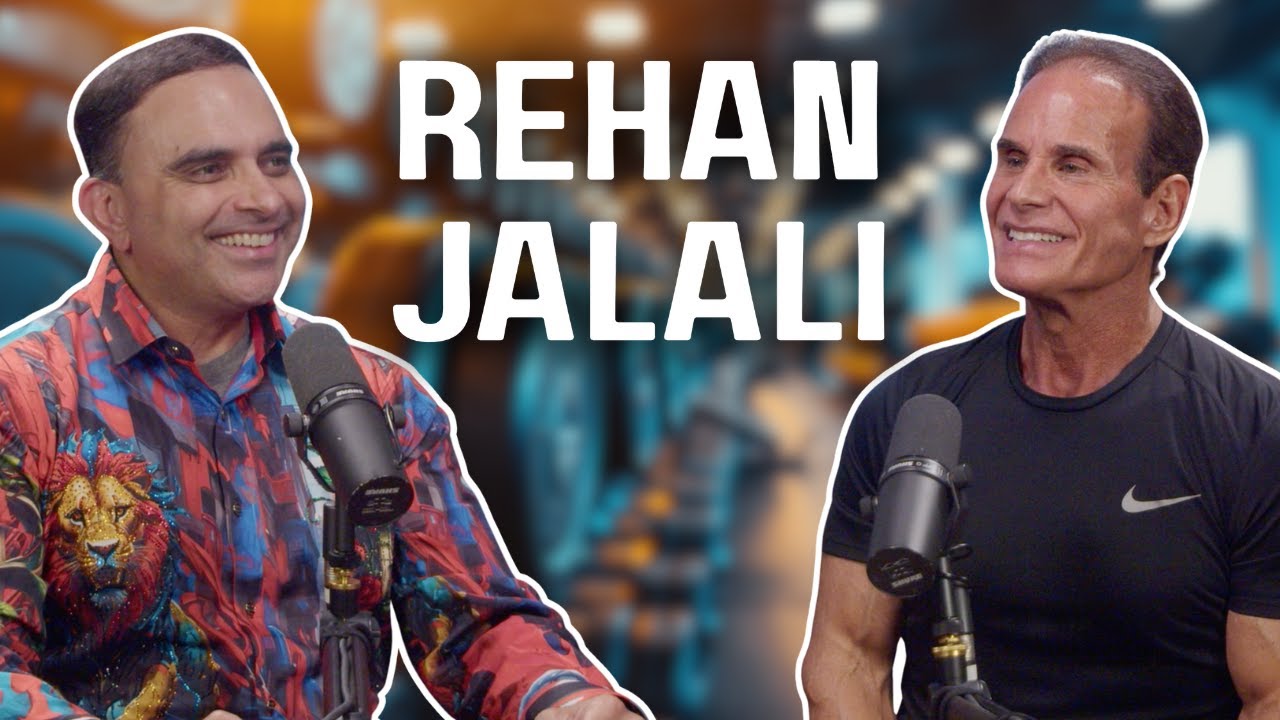
Dan Clark has lived that version. Most people know him as Nitro on American Gladiators, the athlete with the physique that, in Mike Torchia’s words, commanded attention the moment he walked into the gym. He has also written a memoir and seen it become a Netflix documentary, Muscles and Mayhem. On episode 45 of Live Well and Thrive, he told Mike what was underneath the muscle, and how he started dealing with it.
The tough-man script has a cost Dan Clark watched up close
Dan named the script directly, because he says it nearly cost him everything.
I’m a man, I’m tough, I need to be big and strong, and I can’t express myself. I can’t have a vulnerability.
In his view, that kind of thinking leads to drug use and drug abuse, and he did not mean only the performance drugs bodybuilders call gear. He called it a slippery slope.
He watched where that side of men’s mental health ends. His father was a Marine who, Dan said, never spoke about his grief, never raised his hand and never got help. He described him as the most charismatic man you could meet, who did not know how to deal with his pain or talk about it. His father died at 59 of what Dan calls an accidental opioid overdose. Dan says he can see a straight path from a man who cannot put words to his emotions to a man who ends up like his father.
Why men don’t cry, and what happened when Dan finally did
When Dan was 10, his older brother, who was 12, was electrocuted and died in his arms. Dan did not cry, because men did not cry. His father never had one conversation with him about it. He was too busy with his own grief, and he did not have the words either.
What filled the gap, for years, was applause. Dan said that whenever he heard the roar of a crowd it filled him, and that as a young man with empty places inside, the size of Texas in his words, he made the mistake of taking that adoration for love. He went out and chased it, because applause meant people liked him. He calls it the golden handcuffs of fame.
Fifteen years after his brother died, Dan was on top. American Gladiators had sold out Madison Square Garden. There was a tour, there were toys, he had his own action figure. That night he went out and partied, not because he was sad, but because if it was good it could get better. He woke up the next morning on the floor, still high, and weeping. He had not cried since he was about five years old.
I had everything, and it just didn’t feel like anything. And that scared me.
He was 25. He said that was the moment he had to raise his hand and admit he needed help.
Therapy for men can start with one honest admission
Dan went because his acting coach told him everyone should do therapy. Even then he set it up on his own terms. He chose a woman because he would not cry in front of a man. He said he could not be emotional in front of another man, and he was honest that this was the reason.
For a few weeks he told her everything he was ashamed of, and some of the pang he had carried inside began to ease. When Mike asked whether she ever explained why he had been crying, Dan’s answer was short.
I never grieved my brother.
That was the release. He did not know how to process the loss at 10, and nobody showed him. It waited for him for 15 years. If you are a man who has not talked to anyone about something that happened decades ago, that may be the most useful sentence in this post on men’s mental health. Dan is careful to add that it was not a one-time fix. He still works on it daily, and he says the reasons to go forward and to get better keep changing.
Survivors guilt and unresolved grief can run a whole life
Dan connected his story to the film Ordinary People, in which a young man loses his older brother and feels he should have been the one who died. That was how Dan felt. His brother was the older one, the stronger one, the faster one. Survivors guilt pushed him to be seen, because he felt he was living for two, and trying to prove he deserved to live.
Underneath, he said, he was a scared kid. At 10, without putting it into words, he concluded that if it could happen to the strongest person he knew, it could happen to him. That is when he got into size and strength.
I ended up building this meat suit that protected me from the world, so I didn’t feel anything.
Mike asked if the body was his armor. Dan said it was all to protect that little kid inside. Writing his memoir, he said, let him open the hood and look at why he was so drawn to size, strength and power. It took years of reading, personal development and therapy to get a clear picture of what makes him tick. Even his writing started there. When he first moved to Los Angeles in the late 1980s, he said, he could not express his emotions to the people in his life, so he put them on the page, where it felt safe.
Comparison is the thief of joy, so he chases fulfillment instead
Even with the body and the career, Dan said he never felt quite good enough. He calls himself his own worst critic. The voice is not cruel, he said; it points at fat here and a weak spot there. He uses it to keep getting up to train, and he has also had to make peace with it.
His line on that voice is a familiar one: comparison is a thief of joy. His addition is the part worth keeping. Nobody compares himself with someone below him. He was on TV, wrote books and produced shows, and still measured himself against friends with bigger careers. A friend’s daughter once told him he was the most accomplished person she knew, and he said his first thought was that she did not know what she was talking about.
At 60, he says he is clear on who he is and what he wants to put into the world. He chooses to stay aware that death is coming, not cynically but realistically, and to be mindful and enjoy the time he has.
Not so much chasing happiness, but chasing fulfillment.
His distinction is that happiness is quick and short, and fulfillment fills you up deeper inside.
Men’s mental health needs more than training can carry
Mike has built his life on what training does for the mind: discipline, focus, a body that keeps up with you. Dan’s story is a reminder of where that stops. The muscle protected him from feeling, and it did not heal anything. It took a conversation he had avoided for 15 years. The discipline side of the story is covered in how to build self-discipline and in Chuck Zito on discipline, stunts and success. Dan’s lesson is the other half of men’s mental health: strength is not the same as being well. The same body later failed him in a different way, a story told in chest pain after workout. To understand how Mike thinks about the whole person, start with his story.
Where to go from here
Watch the full episode with Dan Clark on YouTube. Read more about Mike Torchia and how he works. If you are ready to build a plan that looks after more than the body, book a consultation and start with a conversation.
QUESTIONS PEOPLE ASK
Why do many men avoid therapy?
Dan Clark's answer on the episode is the script he grew up with: a man is tough, big and strong, cannot express himself, and cannot show vulnerability, because that would mean he is weak. His father, a Marine, lived by it and never asked for help. Dan went only when a coach urged him, and he picked a woman therapist because he would not cry in front of a man.
What is survivors guilt?
As general context, survivors guilt is the guilt a person carries for living through something someone close to them did not. Dan described his own version: after his older brother died, he felt the wrong brother had lived, and he spent years living for two and trying to prove he deserved to be here. He connected it to the film Ordinary People.
How do you deal with grief you never processed?
Dan's experience is that it surfaces anyway. He did not grieve his brother at 10, and it came out at 25 as weeping he could not explain. Therapy is where he found the reason. He is careful to say the work did not end there: he still works on it daily. As general context: if grief is shaping your life years later, a licensed professional is the place to start, and in the US you can call or text 988 to reach the Suicide and Crisis Lifeline.
Is comparison really the thief of joy?
Dan says it is, and he names the mechanism: nobody compares himself with someone below him, only with someone ahead. He was on TV, wrote books and produced shows, and still measured himself against friends with bigger careers. What helps him, he says, is reminding himself he is on his own path, and aiming for fulfillment rather than quick happiness.
KEEP READING