How to Build Self Discipline: What Bruce Cardenas Learned
Bruce Cardenas told Mike Torchia how the Marines, a butcher shop, and Saturdays at Gold's Gym taught him to show up. The discipline behind Quest, in his words.

Somewhere past 45 the problem stops being knowledge. You know what to eat. You know you should train. You know sleep matters. What breaks is the part that gets you to do it on the third Tuesday after the motivation wears off, when nobody is watching and nobody would notice if you skipped.
That is the real question behind how to build self discipline, and most answers to it are slogans. Wake up at five. Cold showers. A 75-day challenge. They work for the people who were already disciplined and fall apart for everyone else, because they describe the output and skip the training.
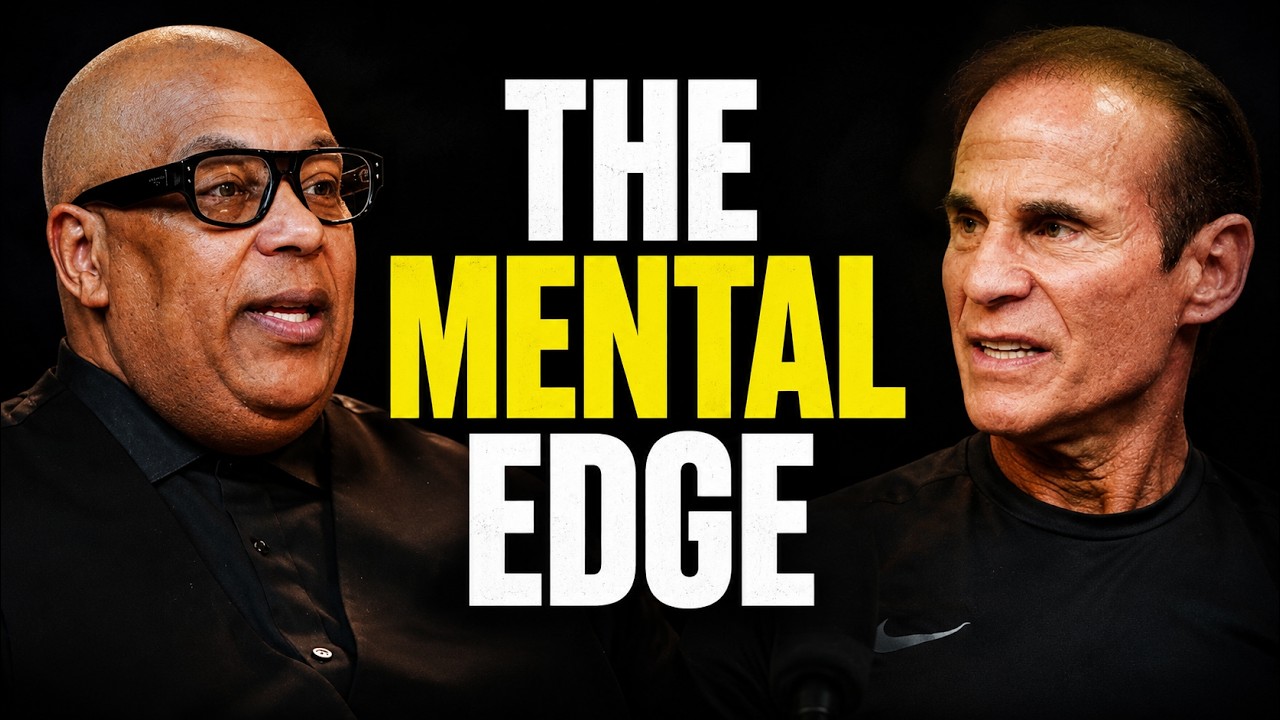
Bruce Cardenas is worth listening to on this because his discipline was trained, not issued. On Live Well and Thrive, Mike Torchia sat down with a close friend of many years: a Marine, a former police officer, a security business owner, and part of the team that helped turn Quest Nutrition, a protein bar made in a kitchen, into a company that sold for billions. His book, Lead With Value, had just come out. What follows is what the episode says about where discipline comes from, with both men in their own words.
Discipline starts with someone refusing to rescue you
Cardenas describes himself at 18 as a kid from New Jersey with no plan beyond joining the local five-person police department. He went to the chief and asked for a job. The answer, as he tells it, was not kind and turned out to be the most useful thing anyone said to him.
You are young, stupid and immature. But if you go into the Marines, I’d hire you when you come back.
So he joined the Marines. The world got big, New Jersey got small, and a powerlifting trip to Camp Pendleton in the late 1980s turned into a job fair, an LAPD application, and a life in California. None of it was his plan. All of it came from a person who declined to give him what he asked for.
The pattern repeats through his story. His father ran a construction company and taught him that nothing comes for free and that if you want something you have to earn it. He was working by about 12, delivering newspapers and doing odd jobs. Two Italian brothers who ran a butcher shop gave him the same lesson in a different accent: figure it out yourself.
Mike recognized his own father in that. A strict Italian who, whenever young Mike came home with a problem, said the same two words: go figure it out. Mike asked for advice and got refused, on purpose, because his father believed that if he solved it for him, nothing would be learned.
How to build self discipline one repetition at a time
Mike’s description of what that did to him is the most useful thing in the episode for anyone wondering how to be more disciplined. He does not call it willpower. He calls it training.
It was like bodybuilding training. Repetition, repetition, repetition. So whatever awaits me, I can handle it.
Obstacles, in his telling, are not problems. They are reps. Each time you handle one yourself, the next one gets lighter, the same way a squat does. He still does it today: when something goes wrong, he looks up, tells his late father he will deal with it, and deals with it immediately.
This is the piece most advice on self discipline misses. Discipline is not a trait you check for. It is a conditioned response, and conditioning requires volume. You become a person who handles things by handling the next thing, then the one after that, until it is automatic.
Cardenas gives the business version. When he met the Quest founders, who were making bars in their kitchen, he says he was not qualified to enter the field. He knew some nutrition from bodybuilding. What he had was a willingness to do the unglamorous reps nobody else wanted.
Sometimes I would spend four or five hours at Gold’s Gym just pitching the product. And no one else wanted to do it. So I did it myself.
Saturdays at Gold’s. A backpack of bars to the fire station. Five or six cars wrapped in Quest Nutrition ads. Mike remembers the Grove event with a crowd he puts at 64,000, where they sold out of everything, and an athlete exhibition at the Hard Rock in Las Vegas. Cardenas showed up to all of it. Mike’s phrase for him is that he behaved like a soldier.
Show up every day, not brilliantly
The line Cardenas offers on brand building doubles as a rule for your own body: brand stability matters more than brand creativity. If you are going to sell something, he says, you have to be in front of people every day, non-stop. Swap “sell something” for “change something” and the rule holds.
His evidence is the trade show circuit. The Olympia, the Arnold, the LA Fitness Expo, the long exhausting hours. Quest sold almost six years before this recording, and he says he still does all of it for Legendary Foods, the company he helped found afterward. He still goes to Gold’s Gym. The habits did not end when the payoff arrived, which is the tell that they were habits and not tactics.
Mike’s own example sits inside the same story. He ran his Shape Up America campaign in Jack LaLanne’s name, because LaLanne told him before he died that his dream was to improve the fitness of the country. He says the people who went on to build the LA Fitness Expo walked his events taking notes, and he does not resent it. Consistency over years left a mark, and someone else carried it further.
Start today, because people die with their dreams
Cardenas almost did not write the book. He says he always assumed only smart people wrote books, and when a mentor told him he had enough material for seven or eight, he said no. He met a publisher a year later and still did not feel qualified. Two years passed between being told to write it and starting.
People eventually die with their dreams. If you have an idea for a business, start today.
He has watched it happen: the friend who was going to open a gym someday, then the news that he had died with the gym still someday. His advice is blunt. If you want to write a book, start today, even if today means a few notes.
For a body, the same clock is running and the same excuses are on the table. You are not in good enough shape to start training. You will start after the quarter closes. Cardenas waited two years and says he should have started sooner. If you want to know how to build self discipline, that is the first rep: start before you feel ready.
Give first and expect nothing back
This part of the episode sounds least like a lesson in how to build self discipline and may be the strongest one. Cardenas says everything in his life came from relationships, not from being the most qualified or the most educated. Those relationships, by his account, put him in the White House five times.
His rule for building them is to do things for people with no expectation of return. Send product. Show up at someone’s event. Never follow up with “what can you do for me.” He says it comes back tenfold, and that the next book he is writing is called The Servant Leader, because the Marines, the police department, the security work, and the food business were all, at bottom, service.
He still gives strangers his phone number and 20 minutes to walk through a business idea, either to talk them into it or out of it. Mike’s version of the same instinct is shorter: he replies to everybody. If you are wondering how to be more disciplined about your own health and the barrier is that you feel unqualified to ask, both men are telling you the same thing. Ask.
What the episode says about protein bars, and what it does not
The episode is titled for Quest Bars, so you may have arrived asking whether protein bars are good for you. Cardenas and Mike barely discuss it, and this post will not fill the gap with facts the episode did not contain.
What Cardenas does say is telling. Asked about the Legendary Foods line, which he describes as protein versions of familiar foods, he volunteers this:
If you were to call our support team, we would advise you to eat real food.
A bar, a snack, or a cookie, in his framing, is for when you are on the go or craving something sweet and want a choice. He says his products carry about 20 grams of protein per pack, and that the company stayed close to trainers and bodybuilders because they understand protein and macronutrients. That is a seller’s view, stated as his.
One more health note from the episode belongs here, attributed. Cardenas says a friend of his over 50 was sweating and short of breath at dinner, saw a cardiologist the next morning on his urging, and ended up with six stents for what he describes as a 99 percent blockage. His point is that looking fit and having good bloodwork are not the same as having your heart checked. Mike agreed, and added that heart disease is the number one killer of women. Talk to your physician about what screening is right for you. The episode does not prescribe anything, and neither does this post.
Where discipline meets design
Cardenas’s story is a case for training the reflex. It is not a case for doing it alone: a chief, a father, two butchers, a training partner who dragged him onto a plane to California, and founders who believed in him before he was qualified. Every rep he describes had someone on the other side of it.
That is how Operation Fitness is built. Mike is the architect who designs the program, and his team delivers it with accountability, so the repetition happens whether or not your motivation showed up that week. Tested, not guessed: the program starts with testing, then adjusts across a season. Mike has trained since he walked into Gold’s Gym at 15, a New York kid who came to California for two weeks to meet Arnold Schwarzenegger, and this episode was recorded in the weeks before he was due to be honored at Muscle Beach on July 4, 2026. You can read who he is and decide whether his kind of discipline is the kind you want designed for you.
Where to go from here
Watch the full conversation with Bruce Cardenas on YouTube: The Marine Behind Quest Bars.
See how a program designed by Mike and delivered by his team turns the decision to start into a structure that holds: Programs.
If you have been putting off the first step for a year or two and want a straight conversation about where to begin, request a consultation.
QUESTIONS PEOPLE ASK
How do you build self discipline as an adult?
On the episode, Bruce Cardenas traces his discipline to people who refused to rescue him: a father who taught that nothing comes for free, a police chief who sent him to the Marines, and two butchers who made him figure things out. Mike Torchia describes the same pattern as repetition, like bodybuilding training. Neither presents it as a formula. Both present it as showing up, repeatedly, for work nobody else wants to do.
What did Bruce Cardenas do at Quest Nutrition?
The episode describes him as part of the team that helped turn a protein bar company started in a kitchen into a business that sold for billions. By his own account he was not a nutrition expert when he met the founders. He promoted the product himself: Saturdays at Gold's Gym, fire stations, expos, and five or six cars wrapped in Quest ads. He says Quest was sold almost six years before the recording.
Are protein bars good for you, according to the episode?
The episode does not go deep on protein bar nutrition. Cardenas says that if you called his company's support team, they would tell you to eat real food, and that a bar, snack, or cookie is for when you are on the go or craving something sweet. He says his products carry about 20 grams of protein per pack. That is a seller's view, stated as his, not a nutrition verdict.
What is the fastest way to be more disciplined?
Cardenas says people die with their dreams, and his advice is to start today, even if that means a few notes. He waited two years to write his book and says he should have started sooner. Mike's view is that handling obstacles is a trained reflex: repetition, repetition, repetition. Neither man offers a shortcut. Both describe a habit you build by doing the work in front of you.
KEEP READING