Drop Sets and 100-Rep Workouts: How Shawn Ray Built His Physique
Drop sets, strip sets, and 100-rep leg days built Shawn Ray's physique. What he told Mike Torchia about volume, and why at 61 he goes slower and lighter.

You have trained for years, and somewhere in your forties or fifties the plan narrowed to the same weights, the same sets, and a heavier number to chase when your joints allow it. Then they stop allowing it. Drop sets come up in that moment because they promise more work without a heavier bar, and most of what you read about them is a formula.
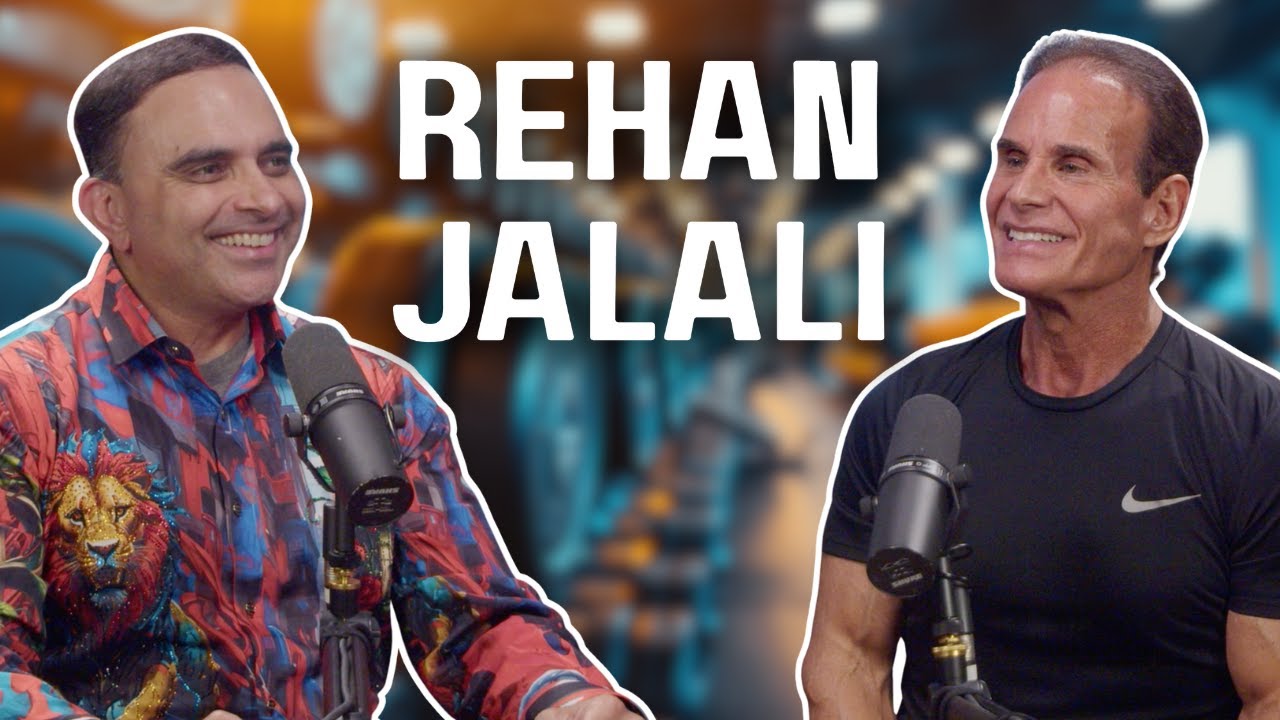
This post is not a formula. It is how one man used drop sets, strip sets, and 100-rep sets to build a physique that competed in 13 Olympias, 12 of them in a row. Shawn Ray, an IFBB Hall of Famer and the 1991 Arnold Classic champion, told the story to Mike Torchia on the November 4, 2026 episode of Live Well and Thrive.
What follows is his account and Mike’s, in their words. It is the practice of two competitive bodybuilders, not a prescription. The episode gives no rest periods, no weight percentages, and no weekly schedule, and this post adds none. The part written most directly for you comes near the end, where Ray, at 61, explains why he no longer trains the way he used to.
Drop sets were Shawn Ray’s answer to stronger men
Ray was never trying to be the strongest man in the gym. He says he never monitored his strength. What he looked for was a training partner who was bigger and stronger than he was, someone who would make him work harder, and then a way to beat him. His tools, in his words, were faster reps, higher reps, and drop sets.
That approach came from his mentor, John Brown, whom Ray describes as a two-time Mr. Universe and three-time Mr. World, met near the end of Brown’s career. Ray says he could not control what the judges decided on stage, but he could control what happened in the gym. Brown’s rule for winning there, as Ray recalls it:
It doesn’t matter how much weight you use. It’s the amount of reps you’re doing.
The rest of the rule was the drop sets and the fatiguing of the muscle. Those are the drop sets benefits as this episode makes the case: not a heavier lift, but more work from the muscle you have. Ray says that if a partner wanted to wrap his knees and stop at six reps of squats, it would not happen with him, because six reps was his warm-up. He knew volume was the key to beating stronger men.
He is careful not to make it sound like a gift. He says there was nothing special about it and that he is not a unicorn. The volume, and the hours that went with it, are what he credits for taking him back to the Olympia year after year.
Strip sets and the 100-rep workout: Ray’s teenage leg day
Ray was 17 when he trained legs with Brown, and he had nothing to compare the sessions to. They opened with 100 repetitions on the leg extension. Then came squats supersetted with the leg press, the two movements back to back. Ray says he was often left lying on the ground, and often throwing up.
Strip sets came next. On the leg press they took weight off, then more weight off, then more, until his legs were rubber bands. Then Brown would help him stand up under the squat rack with two plates on the bar and 50 repetitions still to finish. Ray was 17 or 18, and Brown sat and watched for as long as it took.
I don’t care how long it takes, but we’ve got to get them done.
So what are drop sets, in practice? In Ray’s account, a strip set keeps one exercise going by stripping weight off as the muscle tires, and in general gym usage, outside the episode, drop sets and strip sets are two names for the same idea. A superset workout pairs two exercises with no break between them. The question of drop sets vs supersets never came up in his training. He used both in the same session.
Ray is clear that he could not keep up at first. He called himself sick; Brown told him it was not an illness, he just did not have the fitness yet. It made him more determined not to quit. None of this is a 100-rep workout for you to copy. It is what one teenager did on the way to a professional career. If lighter weight for many reps interests you for a different reason, our post on blood flow restriction training covers that separate conversation.
Mike’s Golden Era version of high volume training
Mike heard his own early years in Ray’s story. After he left New York, he trained with Jim Morris and Bill Pearl, then Frank Zane, Arnold, and Franco Columbu. He describes himself then as a sponge, absorbing everything. The training was hard and intense, he said: 100-rep sets, drop sets, and 40 sets per body part when he trained with Arnold and Frank.
Then they ate, at a German place where a few dollars bought a dozen eggs and a pound of beef, and went back to train for another two hours. They did it six days a week, with Sunday for rest. Before a show, Arnold also made sure Mike posed for an hour in the morning and an hour at night. Mike says he saw his body get denser and harder from the posing.
Ray’s version was the same. After Brown’s sessions, when he was exhausted, he stood in front of a mirror for an hour, in a puddle of his own sweat, practicing his poses. In both men’s telling, high volume training did not end with the last set.
Treat these numbers as history. Forty sets per body part, twice a day, is what Mike and the champions around him did as young men with every hour of the day given to the gym. It is not a program for a reader with a job, a family, and a body past 50, and neither man offered it as one.
A gym partner sets the standard for every rep
Ray’s other lesson from Brown was about company. Once he was training without his mentor, he did to his partners what Brown had done to him. His rule for them was simple: they might not use the same weight, but if he did 100 reps, they did 100 reps.
You are a reflection of the company that you keep.
He says he trained with at least 10 men who became professionals and were not pros when he met them. Some sets were so hard that a trash can was brought over in advance, because everyone knew who would throw up. They took themselves to that last rep, that last set, the place they knew they were not supposed to reach.
Ray draws a line between a mentor and a coach. Brown was never his coach, he says. A coach stands there counting your reps; Brown trained with him and did the work beside him. Mike added a story from Gleason’s boxing gym in Brooklyn, where his friend Bruce Silverglade told him what made Mike Tyson great. It was not strength or speed. It was his mind: he practiced the way he played.
At 61, Shawn Ray exercises instead of trains
This is the part of the episode written for you. Ray competed from 17 to 36. He had just turned 61 when the episode was recorded, and he says he does not feel a day over 40. He still works out. He just refuses to call it training.
I don’t train. I call it exercise.
The reason is mental. Ray says he has to consciously divorce himself from the aggression he carried as a competitor, because all it takes is working out with the right partner to put him back in that mode. He compares it to a tiger: it is still a tiger, and it still has teeth. So in the gym he reminds himself it is not a competition, and his instruction to himself is short: “Slow it down. Go a little bit lighter.” He says he always has to monitor himself so he does not get hurt.
That is the turn a mid-life professional can use. The man who built his career on 100-rep leg days and sets taken past the point of comfort now goes slower and lighter on purpose, and he is still in the gym. His father’s advice, he says, was to stay mobile and keep moving, and he has. What building muscle looks like once you are past that birthday is in our post on building muscle after 50.
How this fits the way Operation Fitness works
Ray’s career shows what volume did for a teenager with a mentor and nothing else on his schedule. His life at 61 shows the other half: the same man, fitting the work to the body he has now. Mike came up in the same kind of gyms, starting at Gold’s Gym at 15, and he builds on that second lesson.
A program at Operation Fitness is designed by Mike, delivered by his team, and tested rather than guessed, starting with where your body is today, not with what someone did at 17. If that kind of volume belongs in it, it goes in at a weight and a pace set for you. The programs page shows how that plan is put together.
Where to go from here
Watch the full episode with Shawn Ray on YouTube. See how training, food, and recovery are combined on the programs page. If you want to keep training hard without getting hurt, book a consultation and start with an honest look at where you are.
QUESTIONS PEOPLE ASK
What are drop sets?
As general context, a drop set keeps one exercise going past the point where the weight becomes too heavy: you reduce the load and continue. Strip sets are the same idea, named for stripping plates off. On the episode, Shawn Ray describes doing them on the leg press as a teenager, taking weight off again and again until his legs felt like rubber bands. The episode gives no percentages or rest periods, so this answer gives none.
What is the difference between drop sets and supersets?
A superset pairs two exercises back to back. A drop set keeps one exercise going with less weight. In Ray's teenage leg sessions with his mentor John Brown, he used both: squats supersetted with the leg press, then strip sets on the leg press. Ray says the point of both was fatiguing the muscle rather than lifting more weight. That is his competitive practice, not a plan for your week.
Should you train to failure?
Ray's answer changed with age. As a competitor, he and his training partners took sets to the last rep they could manage, sometimes with a trash can set out in advance. At 61, he does the opposite on purpose: he slows down, goes a little lighter, and watches himself so he does not get hurt. Whether failure belongs in your training is a question for whoever builds your program.
Do you need a gym partner?
Ray thinks the right one matters. His line is that you are a reflection of the company you keep, and he says he trained with at least 10 men who turned pro after he met them. He separates a mentor, who trains beside you, from a coach who counts your reps. He also says the right partner can pull him back into competing, which is why at 61 he reminds himself it is exercise.
KEEP READING