Strength Training for Women Over 50: How Lori Fetrick Trains at 63
Lori Fetrick, Ice on American Gladiators, is 63 and trains as hard as ever. Her case for strength training for women over 50, and what Mike Torchia adds.

If you have searched strength training for women over 50, you have found plenty of advice about slowing down. Walk more, lift less, accept what is coming. If you train at all, you have probably been told to keep the weights light so you do not get bulky.
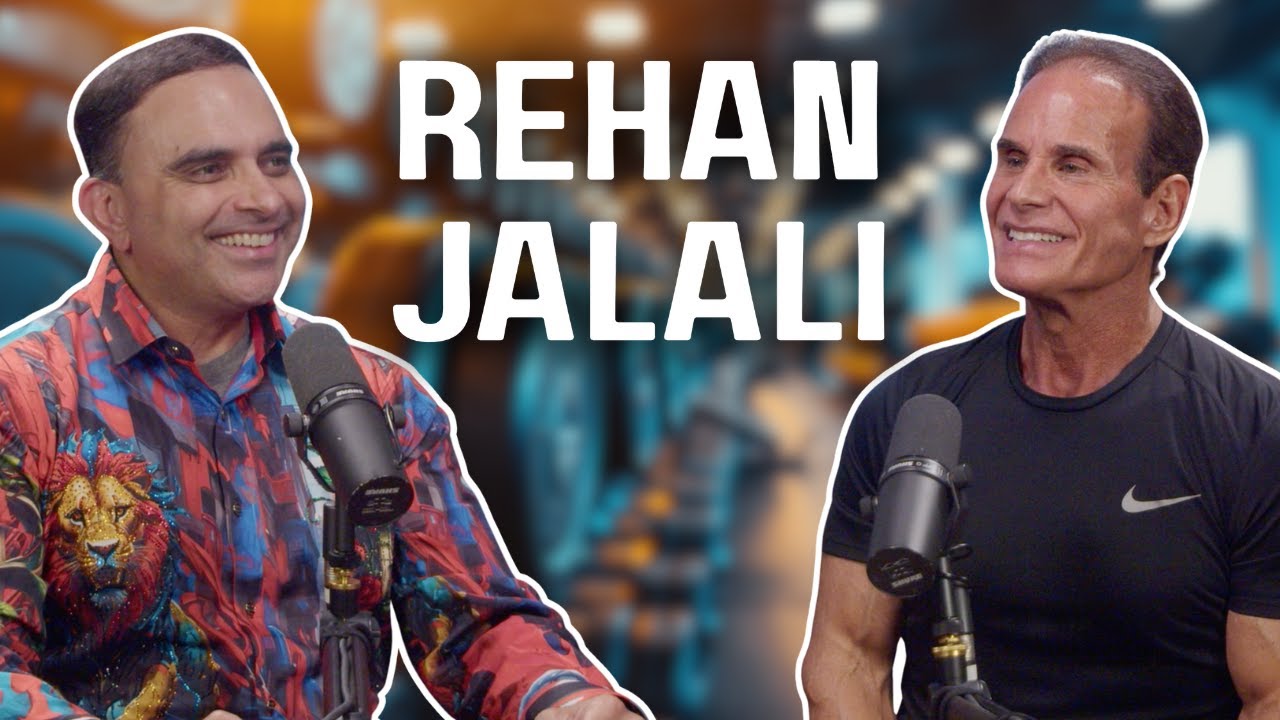
Lori Fetrick never took that advice. She competed as Ice on American Gladiators, she is 63 by her own account, and she told Mike Torchia on Live Well and Thrive that her workouts have not changed since the show. Her case for strength training for women over 50 is personal, not clinical. She claims no medical credential. What she has is decades in the gym and a clear view of the alternative.
She came to it the long way. Out of high school she went to work at a 9-to-5 job, started going to the gym on her lunch hour, and moved into bodybuilding. When American Gladiators held auditions, she went. She says it took about a month and a half of cuts, starting from 50 women, before she got the job. What follows is her view and Mike’s, each attributed, from that conversation.
Aging gracefully, in Lori’s view, is not doing nothing
The episode takes its title from a question Lori asks out loud. Women tell her she should grow old gracefully, and she wants to know what they mean by it.
What does growing old gracefully mean?
Her answer is that the phrase usually describes women who accept that they are growing old and do nothing about it. She does not think you need to. Her view is that you can feel good instead. She also says women are held to a different standard than men: a man can go gray, carry a little extra weight, and grow a scruffy beard, and no one calls it giving up.
Part of her own answer is hormone replacement therapy, which she says she started at 45. When women in perimenopause write to her, the first thing she says she does is help them find a doctor who knows hormone replacement for women. There was no physician on this episode, so this post leaves the hormone questions to one. If you came looking for strength training for menopause, that is the honest split: the hormone side belongs with your doctor, and the training side is what Lori covered, below.
Strength training for women over 50 starts with not fearing muscle
The center of Lori’s message, and of much of what she posts, is muscle. She says the women who reach her are often stuck, and she thinks fear of muscle is a large part of the reason.
Women should not be afraid to put muscle on. Muscle is the anti-aging.
In her view, muscle is what keeps women fit and keeps their metabolism working. She says more women are coming around to it, wanting to feel the pump and put a little muscle on, but she does not think the change is finished.
She described the messages she gets from women who say they have tried everything to lose weight. Her reply is a few questions. Are you in the gym? Are you lifting at all? What is your eating like? One answer she hears is that they eat once a day. Her response is to start there, and in the exchange with Mike, both of them said that eating once a day suppresses metabolism. That is their view, stated on air; more on meal timing is in our post on whether intermittent fasting works.
The other answer she hears is about bulk. One woman told her she trained, but not hard, because she did not want to get bulky. The same woman had told her she was 50 pounds overweight. Her point was that bulk was not that woman’s problem. Lori says she wants to encourage women in that spot, because she believes every woman has the capacity to feel good in her body.
Weight training for women over 50 does not get easier, so the effort cannot drop
Mike asked her what had changed in her training since American Gladiators. Her answer was short.
My workouts have not changed, Mike. I train hard.
She says she does not leave the gym until she feels she has had a real workout, and on a low-energy day she still goes through the whole session. What changed for both of them is the margin. In the conversation they agreed that keeping muscle was easy at 25 and 30 and takes harder training now. Lori’s example is her legs. She says she once grew them with a couple of squats, and now she trains her legs hard twice a week. She told Mike she competed in November of the year before the episode, wanted more size on her legs and glutes, and went back to free squats.
Mike’s own training has a different shape. He said he is back on volume training: low carb, high protein, 20 sets per body part, each body part twice a week. That is his routine after decades of lifting, not a starting point for you. How another guest changed his method past 50 is in our post on building muscle after 50.
Her cardio is intervals. She warms up, goes hard and fast for one minute, eases off for 20 or 30 seconds, and repeats. She says she would rather do that than an hour of slow cardio where her heart rate barely moves. If you are working out where cardio goes in a session, our post on cardio before or after weights covers it. Lori is 63, so this is also what a workout for women over 60 looks like in her hands: hard sessions, legs twice a week, and intervals instead of long slow cardio.
Weight training and bone density: what her surgeon told her
The most specific moment in the episode came out of an injury, covered in the next section. Lori tore her quad tendon and needed surgery to reattach it. She says her surgeon told her he was worried about her bone at 63, because he had seen many patients that age whose bone was too frail to hold an anchor. After the surgery, she says, he told her something else.
You have the bones of a 30-year-old.
In her telling, he said he had to hammer the anchor into her kneecap and that it was not going anywhere. That is one surgeon’s comment on one patient, reported by the patient. It is not a measurement this post can check.
Mike’s view is broader. He said on the episode that weight training increases bone density, and he credited her years of weight training for the strength of her bones. He closed the episode with a note for women: if you are not feeling well, see a doctor, because perimenopause can bring bone density issues among other problems. Bone is one reason strength training for women over 50 comes up at all, and the measurement belongs with your physician.
Lori applies the same thinking at home. Her mother is 85 and trained with weights for years, and Lori tells her she has to keep moving to feel better. Lori’s version of fitness for women over 50, or 85, is not something you do to look good or to lose weight. In her words, it should be part of your life somehow.
An injury can take the gym away, and your head has to carry the gap
The injury had no great story behind it, as she tells it. She was having coffee on her porch when a June bug dive-bombed her face. She jumped up, planted her right leg, turned to run inside, and tore the tendon. Through Gladiators, snowboarding, and wakeboarding, she says, nothing had hurt like it.
For the first three weeks to a month she could not train at all. She sat for almost two months, and at the time of recording she had gone 10 weeks without training legs. She says she had to go internal and deal with it mentally, because she was not used to sitting on the couch or being helpless. She could not carry her own coffee from the kitchen, so she sealed it in a cup, put it in a bag, and carried it in her mouth. She did some writing and journaling. She could walk on the knee by the time of the episode, but she did not yet have the bend to ride the bike.
What she missed was more than the workout.
I realized the gym is my meditation.
She puts her headset in, talks to no one, and trains for about an hour. That is where she says she is focused, relaxed, and full of ideas. Mike agreed in his own way: he once sat through a two-hour Kundalini session and spent much of it looking for a way out.
Asked what she would tell her younger self, she said appreciate the body you have at the time. About 10 to 15 years ago, she says, she looked back at old photos and saw a body she had picked apart while she had it. She does not call what she feels now arrogance. She calls it knowing she put the work in.
How this fits the way Operation Fitness works
Lori’s training is hers, built over decades and adjusted around one injury. Mike’s is his. Neither of them lowered the effort because of age. They changed the plan around it.
That is how an Operation Fitness program is built. It starts with testing, it is designed by Mike, and his team delivers it, adjusted as your body changes. If you are a woman past 50 starting from less than Lori did, strength training for women over 50 begins with a plan built for where you are, and the programs page shows how that plan is put together.
Where to go from here
Watch the full episode with Lori Fetrick on YouTube. See how training is built into each plan on the programs page. If you want to start lifting and want the plan built around your body, book a consultation and start from where you are now.
QUESTIONS PEOPLE ASK
Does lifting weights increase bone density?
Mike Torchia said on the episode that weight training increases bone density, and he credited Lori Fetrick's years of lifting for the strength of her bones. Lori's own evidence is what her knee surgeon told her after surgery at 63: that she had the bones of a 30-year-old. That is one patient's account of one surgeon's comment, not a study. If bone density is your concern, ask your physician to measure it before you build a plan around it.
Will lifting weights make women bulky?
Lori Fetrick's view is that the fear is misplaced. She says women should not be afraid to put muscle on, and that muscle is what keeps them fit and their metabolism working. Her example is a woman who told her she trained lightly to avoid getting bulky, while also telling her she was 50 pounds overweight. Lori's point was that bulk was not the problem that woman had. This is her experience as a lifelong lifter, not research.
Is HIIT good for women over 50?
The episode does not compare methods or cite research. What it gives is Lori Fetrick's own cardio at 63: a warm-up, then one minute hard and fast, then 20 or 30 seconds easier, repeated. She says she would rather do that than an hour of slow cardio where her heart rate barely rises. Whether intervals suit you depends on your heart, your joints, and your program, so clear it with your physician first.
Does eating once a day slow your metabolism?
Lori Fetrick and Mike Torchia both said on the episode that eating once a day suppresses metabolism. Lori hears it often from women who tell her they have tried everything to lose weight, and her answer is to start with the eating. That is their view from years of training, not a finding the episode cites. Our post on whether intermittent fasting works covers what Mike and a sports nutritionist say about meal timing.
KEEP READING