GLP-1 Muscle Loss: What Mike Torchia Would Do Instead
GLP-1 muscle loss is Mike Torchia's first objection to weight-loss drugs. His view, his 500 plus 500 calorie math, and the slower method he would choose.

You want the weight off, and the injection is on the table. Maybe your doctor raised it. Maybe a friend your age dropped a lot of weight and you watched it happen. Then you noticed the rest: the face, the arms, the way the suit hangs. So you typed in the worry by name: GLP-1 muscle loss.
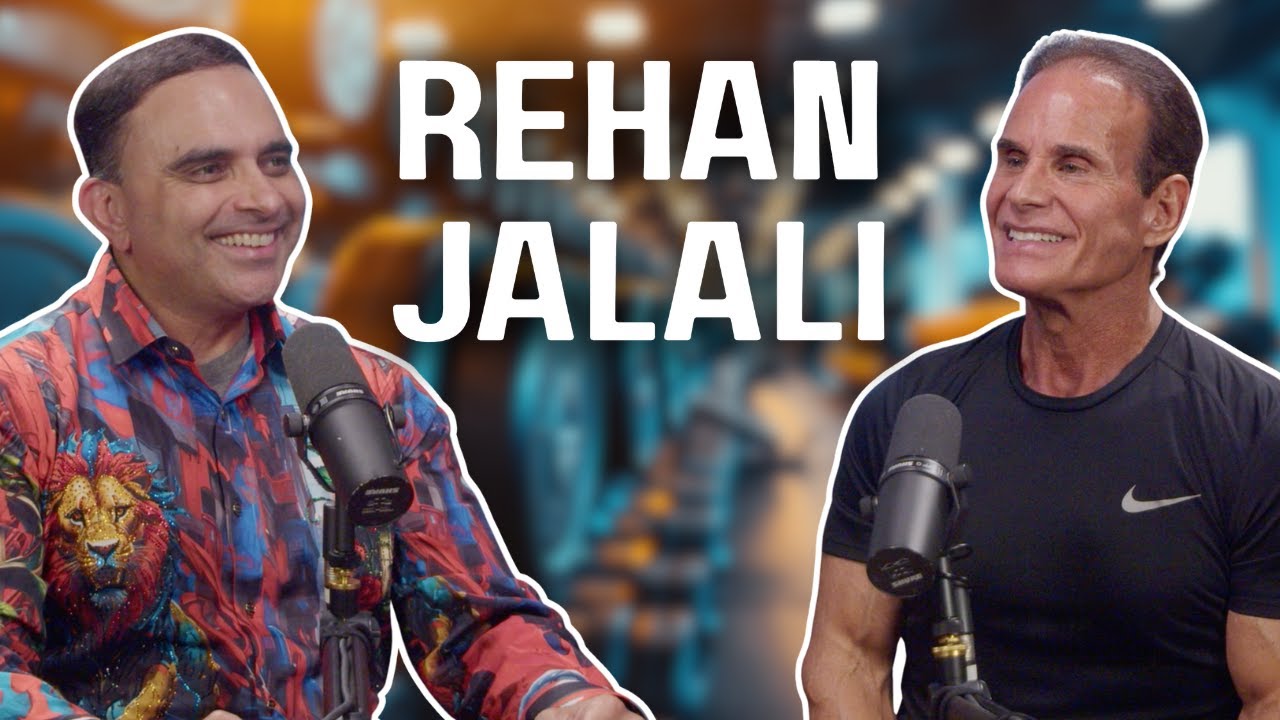
Mike Torchia took that question on Episode 14 of Live Well and Thrive. His guest, entrepreneur Pav Dharwarkar, asked him directly whether the GLP-1 weight-loss drugs were going to be a problem for people. Mike spent the next five minutes on his answer, and then on the method he would use in its place. The rest of that conversation, Pav’s routine and the supplement pitch aimed at men in their forties, is in the post on executive health without the quick fix.
One thing first. Mike is a trainer with more than forty years in gyms. He is not a physician, and what follows is his stated view, not a finding. Whether a prescribed medication is right for you is decided between you and your doctor, and nothing below replaces that conversation.
GLP-1 muscle loss is Mike’s first objection to the drugs
Mike is against the drugs, and he does not soften it. His reason is the order in which he believes the weight leaves. In his account, muscle goes first, then fluid, then fat. The fluid goes because you dehydrate. The fat, the part you wanted gone, comes last.
His explanation is about fuel. A body that is not being fed still needs protein, he says, and it takes that protein from the nearest supply.
Your body needs protein. Your muscles are stored protein, so it starts eating up the muscle.
He says he reads the medical journals every week and that this is where the claim comes from. He names no journal and no study on the show, so this post does not print a figure. Treat it as what it is: a trainer’s reading of a medical subject. If you are weighing a GLP-1 drug, the question to bring to your doctor is the one Mike is really asking. How much of what you lose will be muscle, and what is the plan to protect it?
Fast loss costs you more than pounds, in Mike’s telling
Mike’s second objection is what he says he sees afterward. He describes a gaunt, drawn face. He describes loose skin on people who lost a great deal of weight in a short time, and he says he has seen the result up close. His detail is local: by his account, plastic surgeons in Beverly Hills are fully booked removing that skin.
That is an observation from one man in one city, and he offers no remedy for it on the show. For him it is the visible end of GLP-1 muscle loss: the weight is gone and so is the shape underneath it. His point is narrower. Losing weight and keeping your shape are two different goals, and a method that only chases the scale can fail the second one. He puts it in plain terms later in the episode: what good is looking good in your clothes if you do not like what you see when they come off?
The third cost is the one he takes personally. In his view the drugs work because they remove the desire to eat, and with it the taste for food. For Mike that is no small side effect. It is the whole trade.
I’m Italian. I love to eat. That’s why I started working out.
He was a heavy kid. He started training so he could keep eating, and he has kept that bargain since he was a teenager. Asked to give up enjoying food in exchange for a lower number, he would refuse. You may weigh it differently. He is telling you what the trade looks like from where he stands.
How to lose weight without losing muscle: cut 500, burn 500
Mike’s alternative to the drugs, and to the GLP-1 muscle loss he worries about, is arithmetic. He does it out loud. Take a person who eats 2,200 calories a day, a number he calls hypothetical. Leave out 500 calories a day. By the end of the week that is 3,500 calories, which he counts as one pound.
Now add movement. Do cardio and other training that burns another 500 calories a day, and the daily gap is 1,000. By Mike’s math, that is two pounds a week, half from the plate and half from the work. It is his answer to how to lose 2 pounds a week, and to how to lose fat without losing muscle, in one line: eat a little less, move a good deal more, and keep training.
I’d rather reduce my calories, be consistent, and increase exercise than starve myself.
Read that sentence for what it leaves out. There is no crash, no skipped days, no drug doing the work. The cut is modest by design, because his whole objection to the faster routes is that a starved body feeds on its own muscle. Two caveats belong here. This is arithmetic, not a forecast: nobody on the episode promises you a number. And a safe weight loss per week figure for your body, at your age, on your medications, is a question for your doctor, not for a podcast.
Fasting is the same subtraction, in Mike’s comparison
Mike puts extended fasting next to the drugs, and his reason is mechanical. Both work, he says, by getting you to not eat. “It’s all about caloric restriction. That’s what fasting is.” A fast takes the calories out in a block. A daily cut takes them out a little at a time. In his telling the total is the same number, and he would choose the route that keeps food on the table every day. That is one trainer’s comparison, made in under a minute. For a fuller look at the question, read does intermittent fasting work.
Burn the other 500 on the stairs and in the parking garage
Half of Mike’s math is movement, and he does not leave it all to the workout. His closing advice in the episode is four instructions: balance your meals, balance your workout program, be consistent, be active. Then he describes what active means on an ordinary gym day.
He parks on the very top level of the garage and walks down. He does not use the elevator. He does his cardio, and the moment he steps off the machine he sprints down the stairs, across, and back up another flight. The reason is stated flatly: he wants more calories burned.
I don’t look for shortcuts. I look for more.
That line is the opposite of the pitch you have been hearing. Most of what is sold to people who want to lose weight is a way to do less. Mike’s habit is to find the extra flight of stairs in a day he already planned. He does not try to make the workout shorter. He tries to make it more efficient, and he says he calculates these things the way you would calculate anything else you cared about getting a return on.
The stair sprints are his, at his level of conditioning, after decades of training. The principle travels more easily than the sprint does. Park further out. Take the stairs you would have skipped. Count it.
The plan ends in maintenance, and a program built for you
The last piece of Mike’s method is what comes after. Be smart, he says: increase your activity, reduce your calories, balance the two. When the weight is off, move to a maintenance program. He calls this the simple, easy, safe and effective way, and he grants the other side its point. You could lose it faster. His argument is about what you have left when you are done.
He is also clear about the limits of his own advice. Near the end of the episode he says he is not telling anyone they have to do what he says. He hopes it makes you think, and that you consider the other options before the extreme ones.
That is the right weight to give this post. Mike’s concern about GLP-1 muscle loss is a trainer’s concern, stated as his own. If you are taking a GLP-1 drug now, nothing here is a reason to stop it, and this episode holds no protocol for staying on it. Those decisions sit with you and the physician who prescribed it. What Mike offers is the other path, and it is the one Operation Fitness is built on: a program designed by Mike and delivered by his team, set from an assessment of your body and adjusted as the results come in. Tested, not guessed. The programs page shows how each tier is put together.
Where to go from here
Watch the full conversation with Pav Dharwarkar on YouTube: https://www.youtube.com/watch?v=B3X4ivUwlNI.
See how a program here pairs training, food, and maintenance on the programs page.
If you want to lose the weight and keep the muscle, and you want a plan built around your own body, request a consultation. Mike replies to everybody.
QUESTIONS PEOPLE ASK
Does Ozempic cause muscle loss?
Mike Torchia's view on the episode is that it does. He says weight lost on GLP-1 drugs comes out of muscle first, then fluid, then fat, because a body that is not being fed uses its own stored protein. He names no study on the show, and he is a trainer, not a physician. Whether that risk applies to you, and what to do about it, is a question for the doctor who prescribes the medication.
How many calories are in a pound of fat?
The figure Mike uses on the episode is 3,500 calories to one pound. His example: a person eating 2,200 calories a day who leaves out 500 a day is 3,500 down by the end of the week, which he counts as one pound. He offers it as simple arithmetic for planning a week, and he does not present it as a measurement of any one person's body.
How do you prevent muscle loss on a GLP-1 drug?
This episode does not answer that. Mike gives no protocol for someone who is taking the medication: his answer is a different method altogether, a modest calorie cut plus more activity and consistent training. If you are on a GLP-1 drug and worried about muscle, the person to ask is your prescribing physician, who knows your dose, your history, and your lab work.
Is loose skin after weight loss avoidable?
The episode offers an observation, not a remedy. Mike says he has seen loose skin follow very fast weight loss, and that plastic surgeons in Beverly Hills are booked removing it. His preference is slower loss through activity and a modest calorie cut, but he makes no claim on the show that a slower pace prevents loose skin. A dermatologist or your physician can speak to your own case.
Fasting vs calorie deficit: which does Mike prefer?
The calorie deficit. In Mike's telling they are the same subtraction: fasting is caloric restriction done in a block, and a daily cut is caloric restriction spread across the week. He would take the daily cut, stay consistent, and add exercise, because his view is that a body going without food draws on muscle. That is his comparison from the episode, with no study cited.
KEEP READING