What a Sports Nutritionist Does: Rehan Jalali on Hollywood Prep
Rehan Jalali told Mike Torchia how a sports nutritionist gets actors ready for a role: blood work, time, and the basics. What he tests, what he skips, and why.
You have tried the thing your friend swears by. The fast, the zero-carb month, the powder someone on Instagram takes. Each one worked for about three weeks, and each one left you a little more tired, a little more confused, and no closer to the body you had at 35.
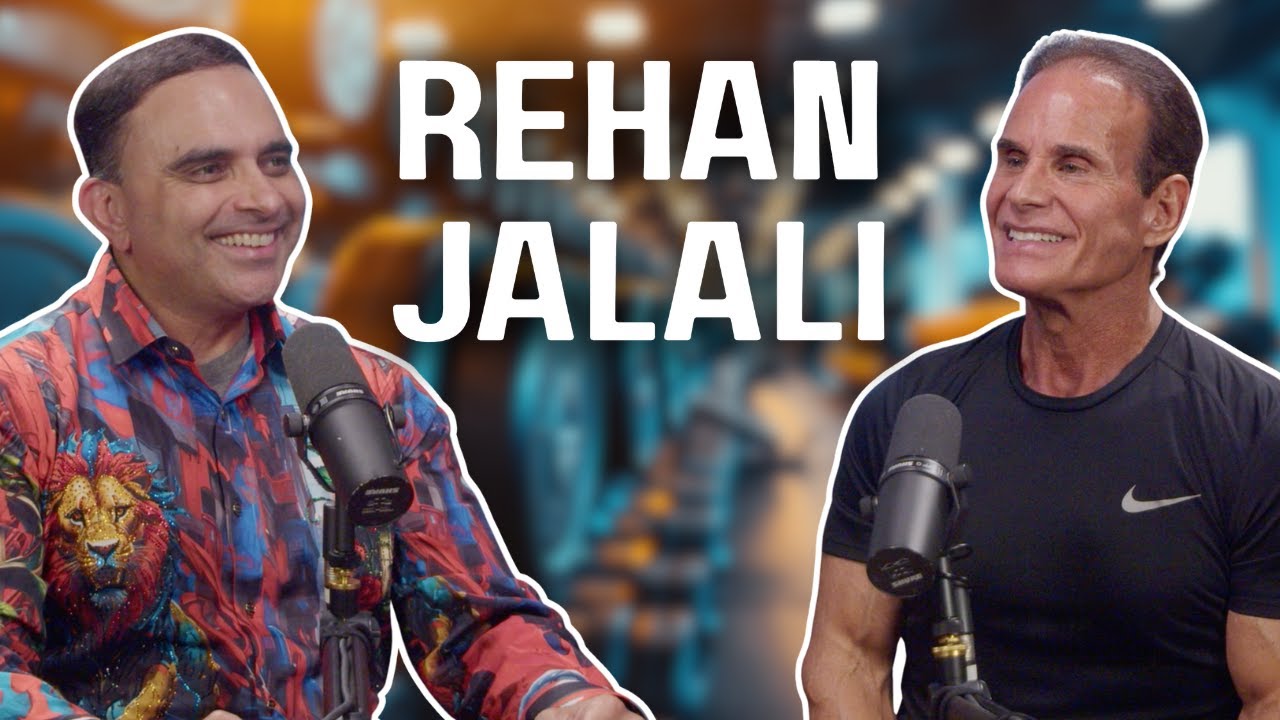
That confusion is the market a sports nutritionist works in, and most of what you see online is noise. On the August 6, 2025 episode of Live Well and Thrive, Mike Torchia sat down with Rehan Jalali, whom he introduced as a certified fitness and nutrition expert and the author of The Six Pack Diet Plan. Jalali says he has been doing this work for 30 years, and the two spent an hour on the same question from two directions: what actually gets a body to change, and why so much of what is sold never does.
This post pulls the practical material out of that conversation. What a sports nutritionist does that a meal plan cannot, why a familiar title has stopped meaning anything, how actors get in shape for movies when the clock is real, and which basics both men keep coming back to after four decades each.
What a sports nutritionist actually does
Jalali’s answer starts with a word he has used for years: personalization. He calls his approach the U program, as in you, and he was blunt that there is no Hollywood trick behind it. If a client will never eat broccoli, broccoli is not in the program. If a client hates cardio, he does not build the plan around cardio. The plan is built around the person, or the person quits.
Mike’s illustration was his first session with Rodney Dangerfield, who told him he had already fired eleven trainers. Mike arrived expecting the building’s gym; Rodney wanted the pool. Mike jumped in fully dressed, sneakers and all, and ran the workout from the water. Jalali’s summary: if Rodney Dangerfield wants to train in the pool, you jump in the pool.
The part that separates a sports nutritionist from a diet is what happens before the plan. Jalali says he runs blood work on his clients regularly and reads the results before he decides anything, because the numbers show him what the client’s story cannot. He described seeing the same pattern in people who had been fasting aggressively for months: lower thyroid markers and, in many cases, lower testosterone, in his reading of their panels.
We don’t guess, we test.
The skill is not knowing the rules of nutrition. The skill is knowing which rules apply to the body in front of you, and checking your assumptions against a lab report instead of a trend. Jalali puts it in three layers: the client’s biochemistry, their physiology, and their preferences, which he says trainers forget most often.
Celebrity trainer is a title, not a credential
Mike opened the episode with a grievance he has carried for a while. He has seen trainers on Instagram and TikTok market themselves as a celebrity trainer without ever having trained one. When he asked a few of them directly, the answer was that they were the celebrity, because they had four million followers. Mike’s view is that a title has to be honest to mean anything, the way writing one book makes you a writer and a shelf of them makes you an author.
Jalali agreed, and went further.
We live in a delusional world. Everything you see is filtered, is not real.
He described meeting people he knew from social media and not recognizing them in person, and abs that had been drawn on for the photo. His concern is not vanity. It is that people buy programs and products from a credential that does not exist, and he considers that a consumer problem. His own test for who to trust is simple: a consistent track record over time, a system that has worked on many different people, and real proof rather than a caption.
Both men circled back to the same observation. Good bodies in the 1960s were built on squats, presses, and food. The one-legged Bosu ball reverse twist press, as Jalali joked, photographs well and does little. In his words, what works works, and the people who implement the basics consistently get the results.
How do actors get in shape for movies? Mostly with time
The question Jalali hears most often from the film side is about speed. He told Mike about an actress who came to his office with a movie weeks away and asked to lose ten pounds in two weeks.
Which arm? You want me to cut off the left arm or cut off the right arm?
His point was that the only fast way to drop that much is to lose muscle and water, not fat, and that the fat comes back. He has seen actors get into striking shape for a role and look like they never trained a month after wrapping, which he considers a failure of the method, not the actor. The clients he has kept for 15 and 20 years got there slowly and stayed there. His phrase for it: what’s fast don’t last, what’s slow is for sure.
Mike’s version of the same rule came from his competition years. He planned each season a full year out, four or five shows inside one month, and trained toward them for the whole year so his body fat came down without extreme dieting. When he hears someone in the gym say they can be ready for a show in six weeks, his answer is that the body will not be seasoned.
What the prep looks like on set, in Jalali’s telling, is less dramatic than the trailers suggest. The actor looks forward to the training hour because it is the one hour away from the movie. The work is ordinary: food, weights, sleep, and the occasional set of push-ups between takes in a heavy costume, which he said he watched Ben Affleck do in Detroit during Justice League. The transformation on screen is the last visible layer of months of unremarkable consistency.
Fasting, cardio, and the scale
Three habits came up, and both men treated them as tools rather than rules.
On intermittent fasting, Jalali’s position is that the word intermittent is doing the work, and the full argument is in does intermittent fasting work. He does a three-day fast once a year, and says a fasting day once a week may work for some people, but he has watched clients fast continuously for a year and lose muscle, with cortisol and thyroid markers he did not like. Mike is harder on it. In his view, years of skipping whole days suppresses the thyroid and sets people up to gain the weight back. Both are describing what they have seen in clients, not prescribing. Your physician reads your blood work; they read theirs.
On cardio, Mike’s rule from his competition years is that cardio never comes before weights, and ideally not in the same session. He does 10 to 12 minutes, hard, at the end, and he prefers late afternoon. Jalali’s favorite is sprints. He worked with the Jamaican team at the 2012 Olympics and pointed to the physiques of sprinters, who carry muscle that distance runners do not. Neither man has much use for an hour of slow treadmill. Mike’s test: if you can hold a phone conversation while you do it, go home.
On the scale, Jalali says the first piece of advice he gives a new client is to throw it out the window. Weight moves with water, and the morning after a big dinner cannot be eight pounds of fat. Mike does not weigh himself at all. The mirror is his guide.
The base before the add-ons
Jalali’s complaint about the questions he gets online is that they skip the foundation. The first thing people ask is what to take to get leaner. His answer is that they should take nutrition, exercise, and sleep.
It’s basic simple nutrition, exercise, sleep, recovery, and some supplements. That’s really what it boils down to.
He compares it to a car. The base model gets you from one place to the other; the rims and the paint are add-ons. People want the add-ons, the peptides and the hormone talk and the new technique from a TikTok, without the base. Even in his own list, supplements come last.
Everything worth having, Jalali said, requires work, effort, and some kind of sacrifice, and nobody can hold you to a higher standard than yourself. Neither man apologized for calling the discipline an obsession. Jalali brought his own fish and sweet potato in a container to a wedding two weeks before the Mr. Texas bodybuilding championship. He won that year.
A goal you can measure, and a calendar that holds it
When a client tells Jalali they want to look better, he tells them that is not a goal. A goal, in his example, is to drop 12 pounds of fat, gain 10 pounds of muscle, and hit a strength number in 12 weeks: specific enough to measure and specific enough to miss. His reason is that progress creates the feeling people are chasing, and you cannot see progress toward a vague wish.
Mike said it his way. Eat with a purpose, train with a purpose, because Monday never comes. He blocks his days the way he read that Edison and Franklin did, with a time attached to every task, and one block has not moved in years.
I have this standing appointment every day, Monday through Friday, from 10 to 12. That appointment is my workout at the gym.
No board meeting gets that slot. Then there is who you stand next to. Jalali cited a long-running study of families that, in his summary, found the strongest predictor of how people’s lives went was the circle they kept. Mike’s tennis coach told him not to play against weaker players because it would lower his game. Both apply that to the gym. Pick five people who want you to win.
How this fits the way Operation Fitness works
Mike has said for years that he is the architect, not the handyman: the person who designs the whole structure rather than patching one wall. This episode shows the same logic from a sports nutritionist’s side of the table. Jalali’s sequence, blood work first, preferences second, plan third, is what Operation Fitness calls tested, not guessed, and it is why no two clients here get the same program. Every program is designed by Mike and delivered by his team, and each one starts with an assessment of your body rather than a template from someone else’s. You can see how the coaching tiers are built on the programs page.
Where to go from here
Watch the full episode with Rehan Jalali on YouTube. Read how Operation Fitness builds a program around your blood work and your life on the programs page. If you want to talk through where your own nutrition has stalled, book a consultation.
QUESTIONS PEOPLE ASK
What does a sports nutritionist do?
On the episode, Rehan Jalali describes the job as building a plan around one person's body rather than handing out a diet. He runs blood work on clients regularly, reads the panel before deciding anything, and factors in what the client will actually eat and enjoy. The plan covers food, training, sleep, recovery, and supplements last. His rule for the order: test first, then design.
Do I need a sports nutritionist if I am not an athlete?
Jalali's clients include actors and executives, not only competitors. His argument is that the method matters more than the title of the client: your biochemistry, your schedule, and your preferences are different from your friend's, so a program copied from someone else is a guess. If you are over 45 and the usual advice has stopped working, an individual assessment is where he starts.
How do actors get in shape for movies so quickly?
Jalali's answer is that they do not, or they pay for it later. He told Mike about an actress who asked to lose ten pounds in two weeks; the only fast route is losing muscle and water, not fat. The actors who hold their shape are the ones who started months out and kept training through the shoot. Mike planned his own competition seasons a full year ahead for the same reason.
What does a smart fitness goal look like?
Jalali's rule on the episode is that 'I want to look better' is not a goal. His example of one is specific and has a deadline: drop 12 pounds of fat, gain 10 pounds of lean muscle, reach a set strength number, and do it in 12 weeks. That is measurable, so you can track it, and he says the progress itself is what creates the feeling people are chasing. Mike's version is to eat and train with a purpose.
How do you make time to work out on a full schedule?
Mike's answer on the episode is time blocking, a method he attributes to Edison and Franklin: list the six to ten things you need to do and attach a time to each. His own block has not moved in years. Monday through Friday, 10 to 12 is a standing appointment, his workout, and he tells executives he cannot take a board call in that slot. His health is the priority; money is secondary.
KEEP READING